How to Price a Government Contract Bid
Build a bid from direct costs, indirect rates, and profit, then test cash exposure and the pricing data requirements that apply to your contract.
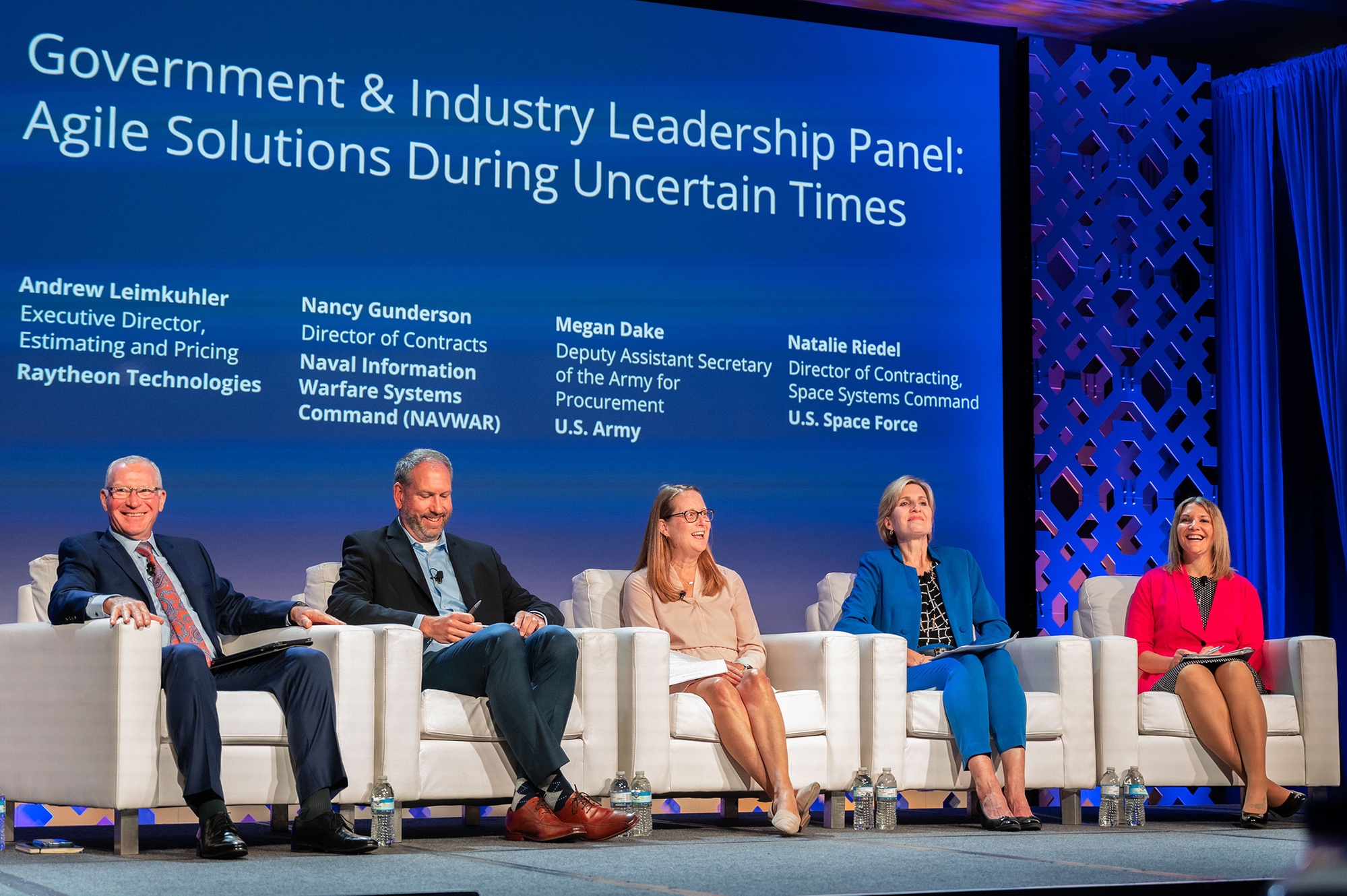
Government contract pricing has two audiences: the buyer needs support for the offered price, while management needs confidence that the work is worth accepting. A competitive number that omits acceptance testing, indirect expenses, or supplier escalation can satisfy neither.
For a cost-based fixed-price estimate, the starting calculation is:
Proposed price = estimated direct costs + allocated indirect costs + proposed profit.
That calculation is a business starting point, not a universal government pricing formula. Commercial pricing, cost-reimbursement contracts, and time-and-materials arrangements require different treatment. The workflow below focuses on federal defense-business bids and proposals; state and local procurements have their own rules.
On This Page
- Read the buying rules before building the price
- Build a cost estimate someone else can reproduce
- Calculate price, markup, and margin separately
- Check competitiveness and cash exposure
- Determine which pricing data the buyer requires
- Keep the records behind the offer
- Set the walk-away price before submission
Read the buying rules before building the price
Start with the complete solicitation, amendments, pricing workbook, statement of work, delivery schedule, and evaluation criteria. Identify each contract line item number, or CLIN, and its unit of sale. A monthly service, an accepted assembly, and an engineering hour need different estimates even when the same people perform the work.
Record the base period, options, quantities, place of performance, acceptance conditions, and required quote-validity period. Separate the price the government evaluates from the quantities management expects to deliver. For each option year, estimate that year's labor, supplier, and indirect costs instead of applying an unexplained escalation percentage. Ask the contracting officer about conflicting instructions before committing to a pricing assumption.
The evaluation method changes where extra spending helps. Under the lowest price technically acceptable process, non-price tradeoffs are not permitted. Under a tradeoff process, the government can select a higher-priced proposal when the benefits justify the additional cost. For the former, avoid adding unevaluated features; for the latter, connect any price premium to a benefit the stated criteria recognize.
Then identify who carries cost risk:
| Pricing arrangement | What the estimate must establish | Mistake to avoid |
|---|---|---|
| Firm-fixed-price | A deliverable scope the company can perform at the offered price | Assuming actual overruns automatically increase payment |
| Cost-reimbursement | Estimated allowable costs, the applicable fee arrangement, and spending controls | Treating all company spending as reimbursable |
| Time-and-materials | Fixed rates for qualified labor categories plus the contract's material treatment | Adding a second profit charge to labor rates that already include profit |
The contract distinctions come from FAR 16.202-1, FAR 16.301-1, and FAR 16.601. The estimating implications are practical applications of those rules. Cost-reimbursement and time-and-materials arrangements also carry contractual ceilings; they do not provide unlimited authority to spend.
Check the agency's applicable deviations as well as the familiar FAR text. The FAR Overhaul FAQs explain that model deviation text becomes applicable to an agency through its adoption of a class deviation. An online model or proposed rule alone is not a substitute for the operative solicitation provisions.
Build a cost estimate someone else can reproduce
Organize the estimate by deliverable, task, labor category, and performance period. For each material input, record a quantity, rate, source, date, and explanation of how it contributes to delivery. That explanation is the basis of estimate.
Estimate labor hours from the actual tasks: engineering, setup, production, quality control, project management, documentation, and acceptance support as applicable. Identify which work is direct and which belongs in an indirect pool. Reconcile the priced hours with the staffing and production schedule so the technical proposal does not promise effort absent from the price.
For purchased inputs, retain supplier quotations with part or service descriptions, quantities, lead times, freight terms, and expiration dates. Check whether quotes remain valid through the expected purchasing date. Include subcontract scope and any exclusions. Price the work needed to integrate and accept a subcontractor's output; a quotation for a component may not include the testing required for the finished assembly.
For defense work, make a cost line or allocation decision for each applicable obligation: cybersecurity, secure handling, inspection, traceability, special packaging, data deliverables, and subcontract oversight. Determine applicability from the solicitation. Do not add a universal “defense compliance” percentage with no explanation of the work it funds.
Next allocate indirect expenses using the company's actual accounting structure. Fringe benefits, overhead, and general and administrative expenses, often called G&A, can have different bases. FAR 31.203 requires logical indirect-cost groupings and appropriate allocation bases where its cost principles apply. It also guards against charging costs incurred for the same purpose in like circumstances both directly and indirectly.
Write each rate with its base: “20% of direct labor plus fringe” is reproducible; “20% overhead” is incomplete. Reconcile the pools and bases to the relevant forecast period, and consider how changing workload affects the denominator. A rate based on full factory utilization may underrecover expenses if anticipated work never arrives.
Maintain a distinction between the company's economic cost and costs allowable under the contract. Where applicable, FAR 31.201-2 ties allowability to reasonableness, allocability, accounting requirements, contract terms, and cost-principle limits. It requires supporting records. A real expense does not become reimbursable merely because the company incurred it.
Calculate price, markup, and margin separately
Consider an illustrative, single-period fixed-price engineering-and-assembly job. All quantities, rates, and percentages below are hypothetical inputs chosen to show the arithmetic. They are not market benchmarks, supplier quotes, government-approved rates, or a recommended return.
Illustrative bid calculation in U.S. dollars
| Cost element | Assumption and calculation | Amount |
|---|---|---|
| Direct labor | 1,000 hours × $80 per hour | $80,000 |
| Fringe benefits | 30% × $80,000 direct labor | $24,000 |
| Overhead | 20% × $104,000 labor plus fringe | $20,800 |
| Materials | Assumed quoted total | $30,000 |
| Subcontract work | Assumed scoped total | $10,000 |
| Other direct costs | Assumed freight and travel total | $5,000 |
| Cost before G&A | Sum of the six preceding rows | $169,800 |
| G&A | 10% × $169,800 assumed total-cost-input base | $16,980 |
| Estimated total cost | $169,800 + $16,980 | $186,780 |
| Proposed price at a 12% margin | $186,780 ÷ 0.88 | $212,250 |
| Estimated profit | $212,250 − $186,780 | $25,470 |
This is an editorial calculation using the disclosed assumptions, checked September 6, 2026. The model assumes nonoverlapping cost pools and that each cost belongs in the displayed base. A real company's accounting practices and contract terms may require different allocations.
Markup divides profit by cost; margin divides profit by price. The distinction matters when management approves a return target:
Price for a target margin = estimated total cost ÷ (1 − target margin).
Price for a target markup = estimated total cost × (1 + target markup).
A 12% markup on $186,780 produces a price of $209,193.60 and profit of $22,413.60. That is a margin of about 10.71%, not 12%. Conversely, the example's 12% margin requires a markup of about 13.64%.
The $25,470 is estimated contract profit before any additional expenses excluded from this example; it is not net income or cash in the bank. At the unchanged $212,250 price, a 10% increase in total estimated cost would raise cost to $205,458, leaving $6,792, or a 3.2% margin. That sensitivity is a reason to scrutinize the largest uncertain inputs before deciding whether the original return is adequate.
For negotiated defense actions covered by DFARS 215.404-4, contracting officers use a structured approach to developing a profit or fee objective, subject to its exceptions. The rule describes weighted guidelines and other approaches. It does not establish a universal contractor entitlement to a particular margin. A company's return target and the government's negotiation objective are separate judgments.
Check competitiveness and cash exposure
A bottom-up cost estimate tells management what performance may cost. Comparison evidence tests whether the offered price is plausible for the buying situation. Use comparable sales, suitable prior procurements, or current competitive quotations with known scope. Normalize quantity, specification, delivery timing, and commercial terms before using an older price as a reference. An announced award total is a poor shortcut when the underlying quantity and scope are unknown.
FAR 15.404-1 distinguishes price analysis, which evaluates the overall price, from cost analysis of its elements. It also addresses cost realism: cost-reimbursement proposals are evaluated for probable cost, while fixed-price realism analysis has more limited applications. Cutting proposed hours without changing the work does not necessarily improve the evaluated position.
If the target competitive price is below estimated cost plus the return management requires, identify a concrete change: a different supplier, a more efficient production method, or an alternative the solicitation permits. Recalculate its effects on performance and risk. An unexplained discount changes the price without changing the work needed to earn it.
Review base and option pricing separately. FAR 15.404-1 also addresses unbalanced line-item pricing and permits rejection when the resulting risk is unacceptable. Do not load an early item simply to improve cash flow or assume profitable later options will rescue a loss-making base period.
Build a monthly cash schedule alongside the estimate. Map payroll, material deposits, subcontract payments, delivery, acceptance, invoice submission, and expected receipts under the actual payment terms. Stress a delayed acceptance event or supplier deposit increase. A nominally profitable bid can require more cash than the company has available; the cash requirement is not the same as an allowable financing charge.
Determine which pricing data the buyer requires
Do this early enough to obtain supporting data from subcontractors. The absence of a certification requirement does not mean the buyer must accept an unsupported price. FAR 15.403-1 identifies exceptions involving adequate price competition, prices set by law or regulation, commercial products or services, and waivers, while preserving the possibility of requesting data other than certified cost or pricing data.
The 2026 threshold needs a contract-specific check
As checked September 6, 2026, 10 U.S.C. 3702(a)(1) specifies a $10 million threshold for covered defense prime contracts entered after June 30, 2026, using other than sealed-bid procedures and expected to receive only one bid. The statute separately addresses older prime contracts, subcontracts, and modifications. A subcontract's treatment can depend on the date of its underlying prime contract.
Meanwhile, the posted FAR 15.403-4 still displays $2.5 million for prime contracts awarded on or after July 1, 2018. Do not treat that webpage as the complete current defense threshold, or extend the defense statute's new number to every civilian procurement. Record the applicable authority, action type, prime-contract date, exception analysis, and solicitation provision. Resolve any inconsistent demand with the contracting officer before deciding what to omit or certify.
When certification is required, FAR 15.403-4 describes certification against the date of agreement on price, or an agreed earlier date as permitted. Keep supporting factual data current through negotiation. A proposal workbook frozen at initial submission is not a sufficient update process.
When the solicitation invokes the standard certified-data format, FAR 15.408, Table 15-2 calls for indexed support, explanation of estimating methods, and cost breakdowns linked to line-item totals. It also addresses subsequent data updates. Use the format actually required, including an authorized alternative; Table 15-2 is not a mandatory template for every federal quote.
Keep the records behind the offer
The following working file connects the price to its support. The table is a recommended internal organization, not a list of attachments required in every solicitation. The formal submission and recordkeeping obligations depend on the applicable provisions, including FAR 15.408 and FAR 31.201-2 where relevant.
| Working record | What it should let a reviewer establish |
|---|---|
| Solicitation and amendment register | Which requirements, quantities, periods, clauses, and pricing instructions were priced |
| Basis-of-estimate workbook | How each task becomes hours, purchased inputs, or another cost driver |
| Labor and indirect-rate support | Which period, cost pool, and allocation base supports each rate |
| Supplier and subcontract file | Scope, quote validity, exclusions, delivery terms, and price support |
| Pricing-data determination | Applicable threshold, exception rationale, requested data, and any certification obligation |
| Risk and cash schedule | Which uncertainties change cost or financing needs, and who accepted them |
| Submission and negotiation history | Which version was submitted, what changed, and how revised data affected the price |
Before releasing the offer, have another qualified reviewer trace selected labor, material, and indirect-cost entries from their support through the CLIN totals. Reconcile unit prices, extensions, rounding, base and option years, the narrative, and the final submitted workbook. Then compare the price volume against the technical solution one last time.
Set the walk-away price before submission
Give management three outputs: the proposed price, the cost and cash sensitivities, and the assumptions that would make the bid unacceptable. Establish the lowest price the company is prepared to accept for the specified work before negotiations begin.
If a concession requires fewer hours, a different component, or a longer schedule, confirm that the revised solution remains compliant and update the estimate. If the company cannot fund delivery, support the requested pricing data, or earn an acceptable return under credible conditions, reconsider the bid. Winning is useful only when the business can perform the contract it priced.
Source notes
- FAR 15.101-2: Lowest price technically acceptable. Establishes acceptability-based selection without non-price tradeoffs.
- FAR 15.101-1: Tradeoff process. Allows a higher-priced proposal when evaluated benefits justify the cost.
- FAR 16.202-1: Firm-fixed-price contracts. Assigns cost-experience risk and resulting profit or loss to the contractor.
- FAR 16.301-1: Cost-reimbursement contracts. Describes allowable-cost payment and the contractual cost ceiling.
- FAR 16.601: Time-and-materials contracts. Defines fixed labor rates including profit, material treatment, and ceilings.
- FAR Overhaul FAQs. Explains agency adoption of model text through class deviations.
- FAR 31.203: Indirect costs. Addresses allocation pools, bases, consistency, and business-volume changes.
- FAR 31.201-2: Determining allowability. Establishes allowability factors and supporting-record responsibilities.
- DFARS 215.404-4: Profit. Describes structured government profit or fee objectives and exceptions.
- FAR 15.404-1: Proposal analysis techniques. Distinguishes price, cost, and realism analysis and addresses unbalanced pricing.
- FAR 15.403-1: Certified-data exceptions. Identifies exceptions while allowing appropriate requests for uncertified supporting data.
- 10 U.S.C. 3702: Required cost or pricing data and certification. Sets the amended $10 million threshold for the covered post-June 30, 2026 defense prime-contract category and separate subcontract rules.
- FAR 15.403-4: Certified data and certification timing. Shows the posted $2.5 million FAR threshold and certification timing requirements.
- FAR 15.408, Table 15-2: Cost/price proposal instructions. Describes indexed data, estimating explanations, line-item support, updates, and alternative formats.
- DVIDS: Government Contract Pricing Summit 2022. Documents the June 15, 2022 summit photograph, photographer, and public-domain designation.
- DVIDS: Copyright and visual-information use notice. Provides reuse restrictions and the required non-endorsement wording.
Last checked: September 6, 2026.
Documentation
Sources
These are the recoverable records used for this analysis. Dates describe the source record; access dates describe our verification pass.
- FAR 15.101-2: Lowest price technically acceptableFederal Acquisition Regulation · Publication date not recorded · checked September 6, 2026
- FAR 15.101-1: Tradeoff processFederal Acquisition Regulation · Publication date not recorded · checked September 6, 2026
- FAR 16.202-1: Firm-fixed-price contractsFederal Acquisition Regulation · Publication date not recorded · checked September 6, 2026
- FAR 16.301-1: Cost-reimbursement contractsFederal Acquisition Regulation · Publication date not recorded · checked September 6, 2026
- FAR 16.601: Time-and-materials contractsFederal Acquisition Regulation · Publication date not recorded · checked September 6, 2026
- FAR Overhaul FAQsFederal Acquisition Regulatory Council · Publication date not recorded · checked September 6, 2026
- FAR 31.203: Indirect costsFederal Acquisition Regulation · Publication date not recorded · checked September 6, 2026
- FAR 31.201-2: Determining allowabilityFederal Acquisition Regulation · Publication date not recorded · checked September 6, 2026
- DFARS 215.404-4: ProfitDefense Federal Acquisition Regulation Supplement · Publication date not recorded · checked September 6, 2026
- FAR 15.404-1: Proposal analysis techniquesFederal Acquisition Regulation · Publication date not recorded · checked September 6, 2026
- FAR 15.403-1: Certified-data exceptionsFederal Acquisition Regulation · Publication date not recorded · checked September 6, 2026
- 10 U.S.C. 3702: Required cost or pricing data and certificationU.S. House Office of the Law Revision Counsel · Publication date not recorded · checked September 6, 2026
- FAR 15.403-4: Certified data and certification timingFederal Acquisition Regulation · Publication date not recorded · checked September 6, 2026
- FAR 15.408, Table 15-2: Cost/price proposal instructionsFederal Acquisition Regulation · Publication date not recorded · checked September 6, 2026
- DVIDS: Government Contract Pricing Summit 2022DVIDS · Publication date not recorded · checked September 6, 2026
- DVIDS: Copyright and visual-information use noticeDVIDS · Publication date not recorded · checked September 6, 2026